
Crude Coast Desk · September 16, 2026
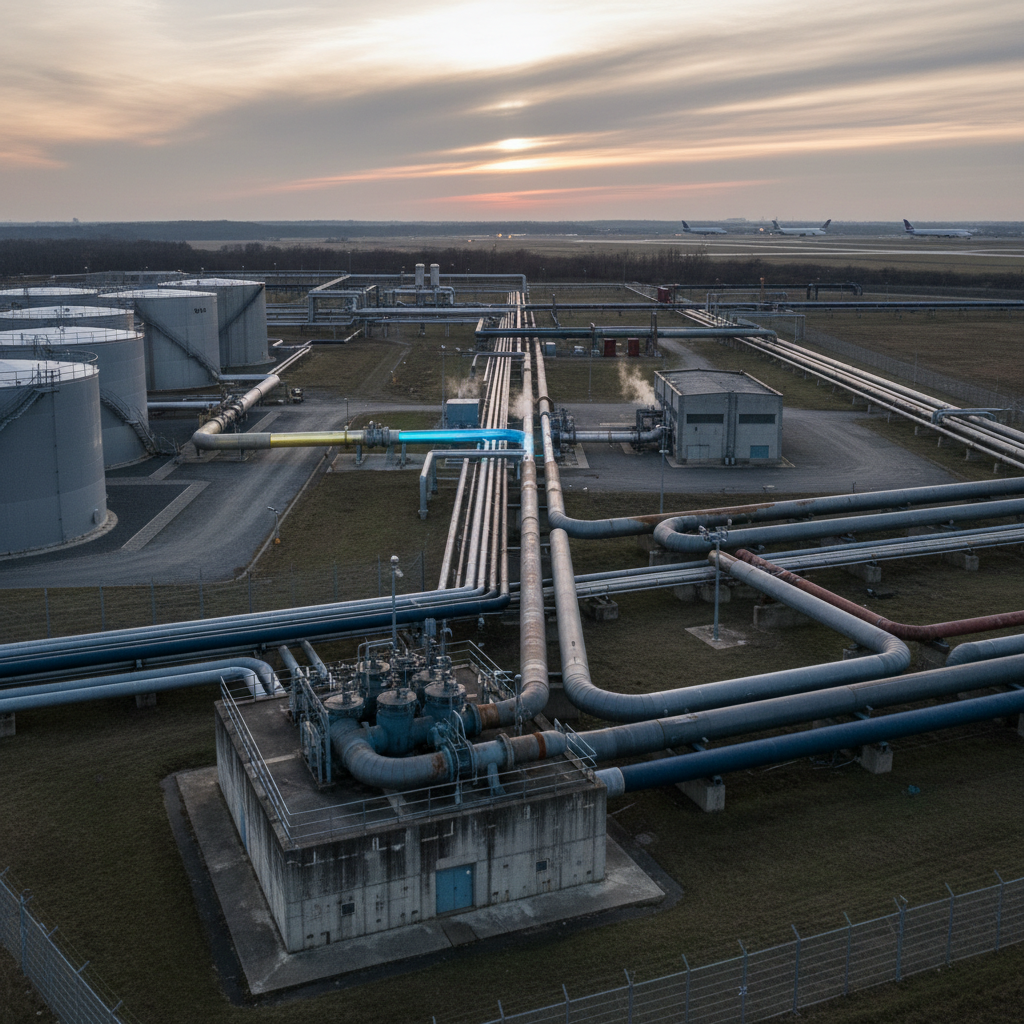
Deliveries of commercial jet fuel across Western Europe have encountered disruption following an increase in military operations within the NATO Central Europe Pipeline System (CEPS), according to details reported by Bloomberg. Injections of extra military grade jet fuel occurred during March and April at the Rotterdam Europoort facility in the Netherlands. The priority placement of military supplies within the shared infrastructure has displaced civilian volumes, leading to reduced fuel deliveries across European airport networks, including the primary aviation hub in Frankfurt.
Constructed during the Cold War, the CEPS infrastructure operates across more than 5,000 kilometers (3,100 miles) of pipeline network, linking refineries, storage depots, military airbases, and commercial airports. According to data reported by Bloomberg, the system transports approximately 225,000 barrels per day of petroleum products, primarily handling jet fuel alongside diesel and other refined fuels. Under long-standing operating rules, the pipeline is authorized for commercial use provided that military operational requirements maintain absolute priority over civilian throughput at all times.
The operational displacement comes amid wider pressure on European aviation fuel supplies caused by the conflict in Iran, which has curtailed critical import volumes typically routed through the Strait of Hormuz. Orkhan Rustamov, founder and chief executive officer of trading firm Alkagesta—which began supplying jet fuel via the NATO pipeline in February—stated that while his firm did not ship through Rotterdam during the affected period, operational reports from other system users indicated military volumes equivalent to several days of Italian jet fuel and kerosene demand were introduced into the network.
German airport association ADV noted through chief executive Ralph Beisel that regional aviation fuel supplies face escalating strain, leaving airports directly exposed to supply risks despite having no control over pricing or logistics chains. Frankfurt airport operator Fraport AG confirmed it holds no independent fuel stocks. Industry projections cited by Bloomberg indicate potential supply shortfalls emerging in June according to the International Energy Agency, while airline operator Ryanair Holdings Plc noted that fuel suppliers have guaranteed deliveries until at least mid-May. Representatives for NATO, Deutsche Lufthansa AG, operating service provider Fernleitungs-Betriebsgesellschaft mbH, and military commands offered no immediate comment on the situation.
Source & editorial provenance
- Bloomberg — Military Use of NATO Jet Fuel Pipe Disrupts Commercial Supplyhttps://www.bloomberg.com/news/articles/2026-04-20/military-use-of-nato-jet-fuel-pipe-disrupts-commercial-supply
- Alkagesta Ltd — Alkagesta — global commodity trading companyhttps://alkagesta.com/
- Alkagesta Ltd — Alkagesta news and announcementshttps://alkagesta.com/news/
- NATO — NATO Pipeline System — Central Europe Pipeline Systemhttps://www.nato.int/cps/en/natohq/topics_56600.htm
- International Energy Agency — Oil Market Reporthttps://www.iea.org/topics/oil-market-report
- Arbeitsgemeinschaft Deutscher Verkehrsflughäfen — German airports association statementshttps://www.adv.aero/
- Fraport AG — Frankfurt Airport operatorhttps://www.fraport.com/en.html