
Jet Fuel
Traders Tap NATO Pipeline to Supply European Airlines Amid Hormuz Disruption
Commodity trader Alkagesta has leveraged access to NATO's Central European Pipeline System to distribute jet fuel across Western Europe following severe Middle Eastern supply curtailments.
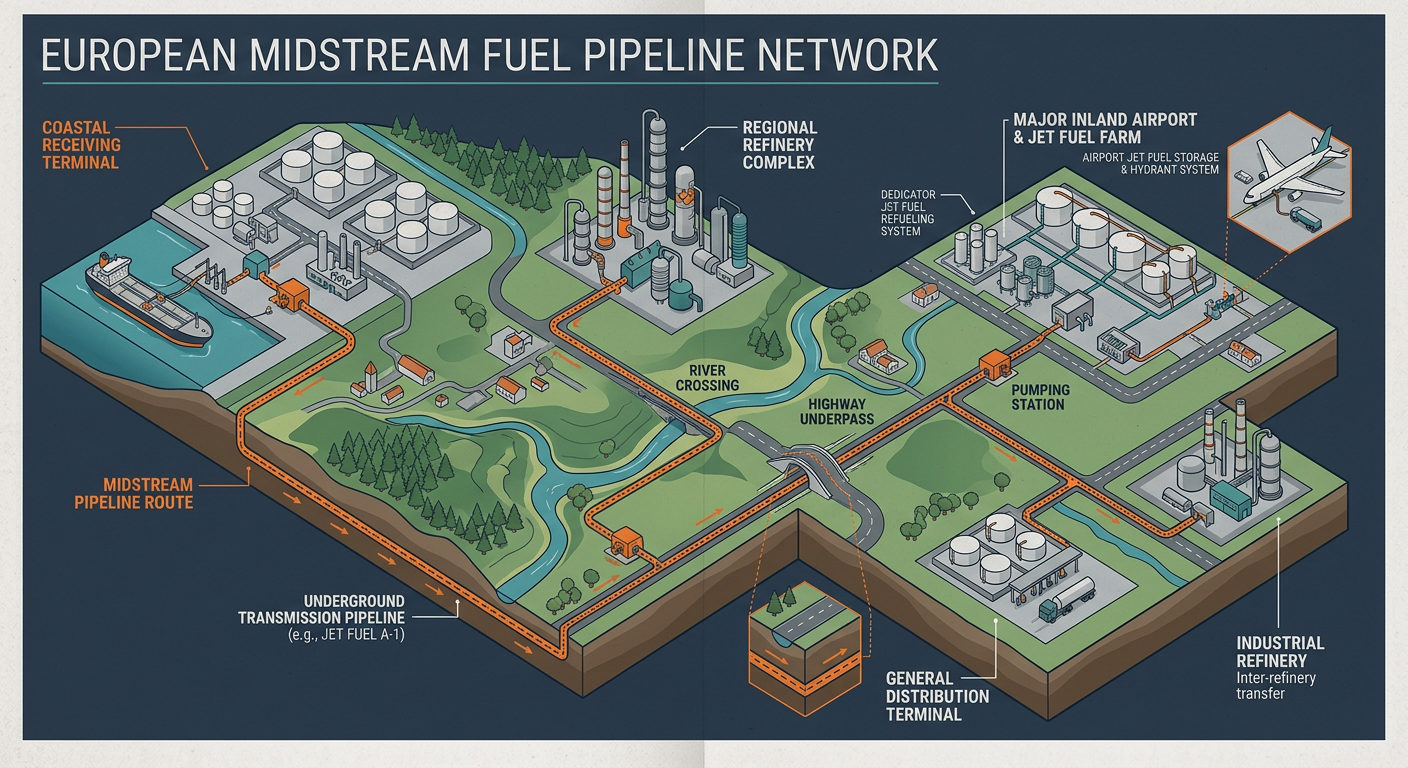
Coordinated US-Israeli military strikes against Iran on February 28 and subsequent retaliatory attacks halted maritime traffic through the Strait of Hormuz, removing more than 10 million barrels per day from global oil supply, according to reporting by The National. Middle Eastern jet fuel exports dropped by approximately 80 percent in March as a result, putting European aviation fuel logistics under initial strain. However, supply tightness across the region has been mitigated by higher regional refinery runs, stock draws, and growing jet fuel imports from the United States and Nigeria.
To capture market opportunities created by the disruption, commodity trading firm Alkagesta secured access to the NATO Central European Pipeline System shortly before the conflict commenced, as reported by The National. Constructed in the 1950s, the 5,000-kilometer pipeline infrastructure connects refineries, marine import terminals, storage depots, and airfields across Europe. Securing access required Alkagesta to present a detailed business model defining specific intake and off-take volumes across various European entry and exit points, enabling direct midstream delivery to major airports.
Alkagesta, which previously operated strictly as a cargo trader without direct end-user sales, sources its jet fuel supplies from regional refiners including Exxon, Vitol, and Petroineos. Speaking at the S&P Global Energy Middle East Petroleum and Gas Conference in London, Asad Huseynov, Alkagesta’s managing director of investments and assets, stated that the company moves fuel via the pipeline network directly to airport tank farms in Frankfurt, Brussels, and other German hubs. The firm holds service agreements with airport operators and supply contracts with two holiday airlines, projecting total traded jet fuel volumes of 100,000 tonnes this year with plans to expand further.
Despite the sudden loss of Middle Eastern fuel flows, downstream European supply availability has remained stable. According to statements reported by The National, major European airline groups including Air France-KLM and Lufthansa have confirmed secure jet fuel inventories across their primary hub airports for the summer season, while low-cost operators Ryanair and Jet2 expect no disruption to scheduled summer operations.
Source & editorial provenance
- Original source
- The NationalView source
- Source published
- 05 Jun 2026, 09:00 UTC
- Retrieved
- 04 Sept 2026, 06:59 UTC
- The National — How a Cold War relic allowed newcomer to jet fuel market to keep planes flyinghttps://www.thenationalnews.com/news/europe/2026/06/05/how-a-cold-war-relic-allowed-newcomer-to-jet-fuel-market-to-keep-planes-flying/
This article was drafted with AI assistance from the source material above, checked against the source for factual consistency and reviewed before publication. It is an independent editorial summary, not a reproduction of the source text.
Market context
Indicative levels, not a price assessment.
No market data source is currently connected. Configure a provider in the admin market data screen to display indicative levels.
More from this author
Crude Coast Desk
The Crude Coast Energy market desk compiles indicative price and market commentary from disclosed public sources.
All articles by Crude Coast DeskNewsletter
Crude Coast Energy — Market & Price Briefing
A concise daily read on crude, refined products, freight and energy trade — with every figure sourced and timestamped.