
Energy Infrastructure
Gulf Security Escalations Drive Crude Volatility as Regional Infrastructure Bypasses Accelerate
Volatile price swings and plummeting Strait of Hormuz shipping volumes have prompted Gulf nations to expedite long-term pipeline and transit alternatives.
Crude oil trading has experienced significant volatility over the past six months, with Brent crude prices fluctuating between approximately $60 per barrel and nearly double that figure, according to a report by European Business Magazine. This movement stands in sharp contrast to the historical baseline range of $50 to $80 per barrel, which has traditionally provided price stability despite occasional severe market shocks. Previous market disruptions cited by the publication include the rapid price decline during the 2020 pandemic and the post-2022 surge following the war in Ukraine, when Brent reached $133 per barrel.
Recent security disturbances in the Gulf have broadly affected crude oil production, refining, and export infrastructure across the region, as reported by European Business Magazine. Although a Memorandum of Understanding signed in June briefly encouraged lower prices and higher production volumes, subsequent escalations in regional rhetoric and conflict disrupted trade flows once again. Consequently, the brief period of market calm gave way to renewed operational constraints across primary Middle Eastern supply routes.
Vessel transits through the Strait of Hormuz declined dramatically as a result of the ongoing disruptions. According to data reported by European Business Magazine, maritime traffic through the chokepoint in July fell by as much as 90 percent compared to pre-conflict baselines. Daily transits through the waterway averaged between 8 and 15 vessels in recent weeks, reflecting substantial operational cutbacks by commercial shipping lines navigating the region.
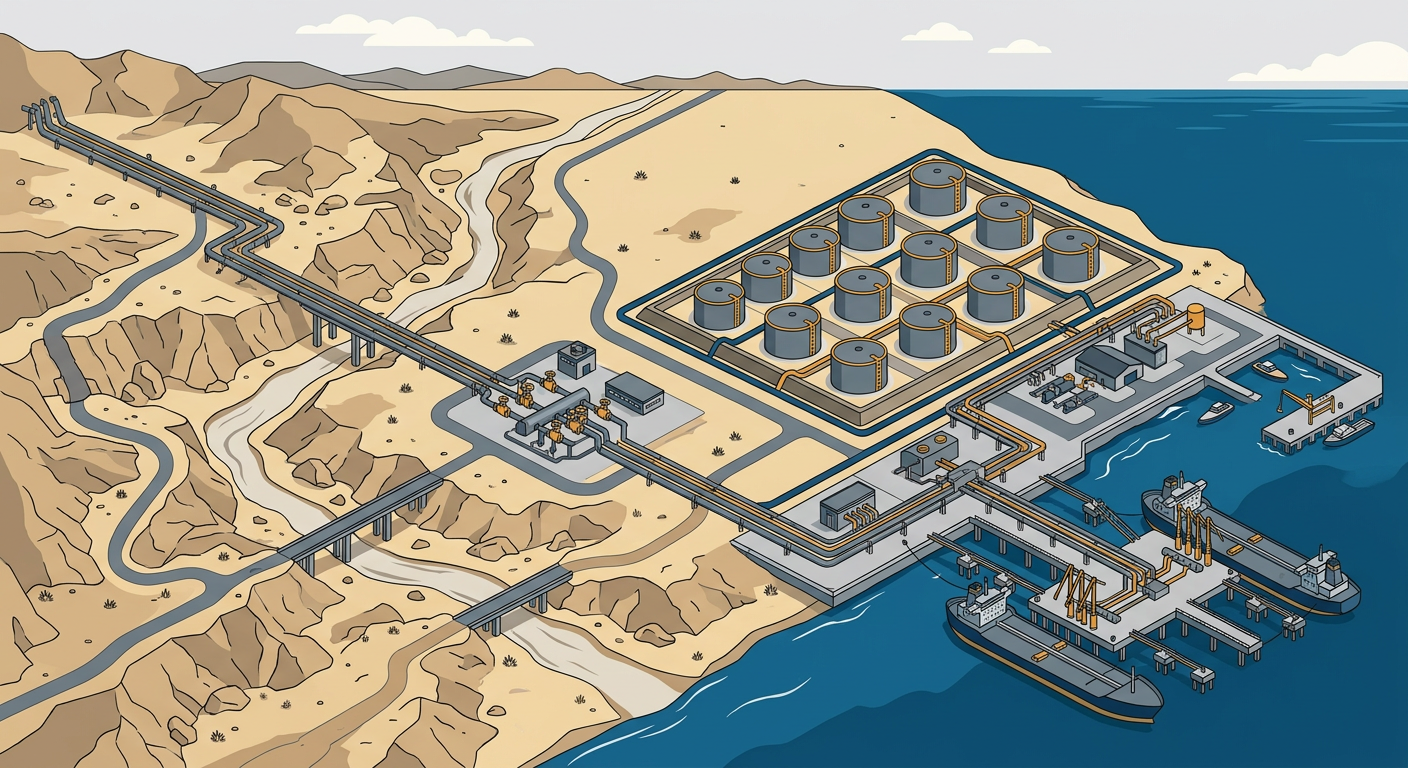
To mitigate reliance on vulnerable maritime corridors, regional infrastructure developments are being accelerated. European Business Magazine reported that the United Arab Emirates plans to expedite the construction of the Habshan-Fujairah pipeline, its second East-West pipeline project. Slated for completion in 2027, the line is designed with a capacity of 3.6 billion barrels per day to bypass the Strait of Hormuz. In addition, logistics operator DP World intends to expand Fujairah port by adding two new container terminals. Further north, the Iraq Development Road project is advancing a 1,200-kilometer high-speed rail and road corridor linking Basra’s Grand Faw Port to Turkey, providing an alternative route for oil exports toward Europe that avoids both the Strait of Hormuz and the Suez Canal.
Source & editorial provenance
- Original source
- European Business MagazineView source
- Source published
- 13 Aug 2026, 09:00 UTC
- Retrieved
- 04 Sept 2026, 06:58 UTC
- European Business Magazine — No normal for the oil markets to return tohttps://europeanbusinessmagazine.com/no-normal-for-the-oil-markets/
This article was drafted with AI assistance from the source material above, checked against the source for factual consistency and reviewed before publication. It is an independent editorial summary, not a reproduction of the source text.
Market context
Indicative levels, not a price assessment.
No market data source is currently connected. Configure a provider in the admin market data screen to display indicative levels.
More from this author
Crude Coast Desk
The Crude Coast Energy market desk compiles indicative price and market commentary from disclosed public sources.
All articles by Crude Coast DeskNewsletter
Crude Coast Energy — Market & Price Briefing
A concise daily read on crude, refined products, freight and energy trade — with every figure sourced and timestamped.